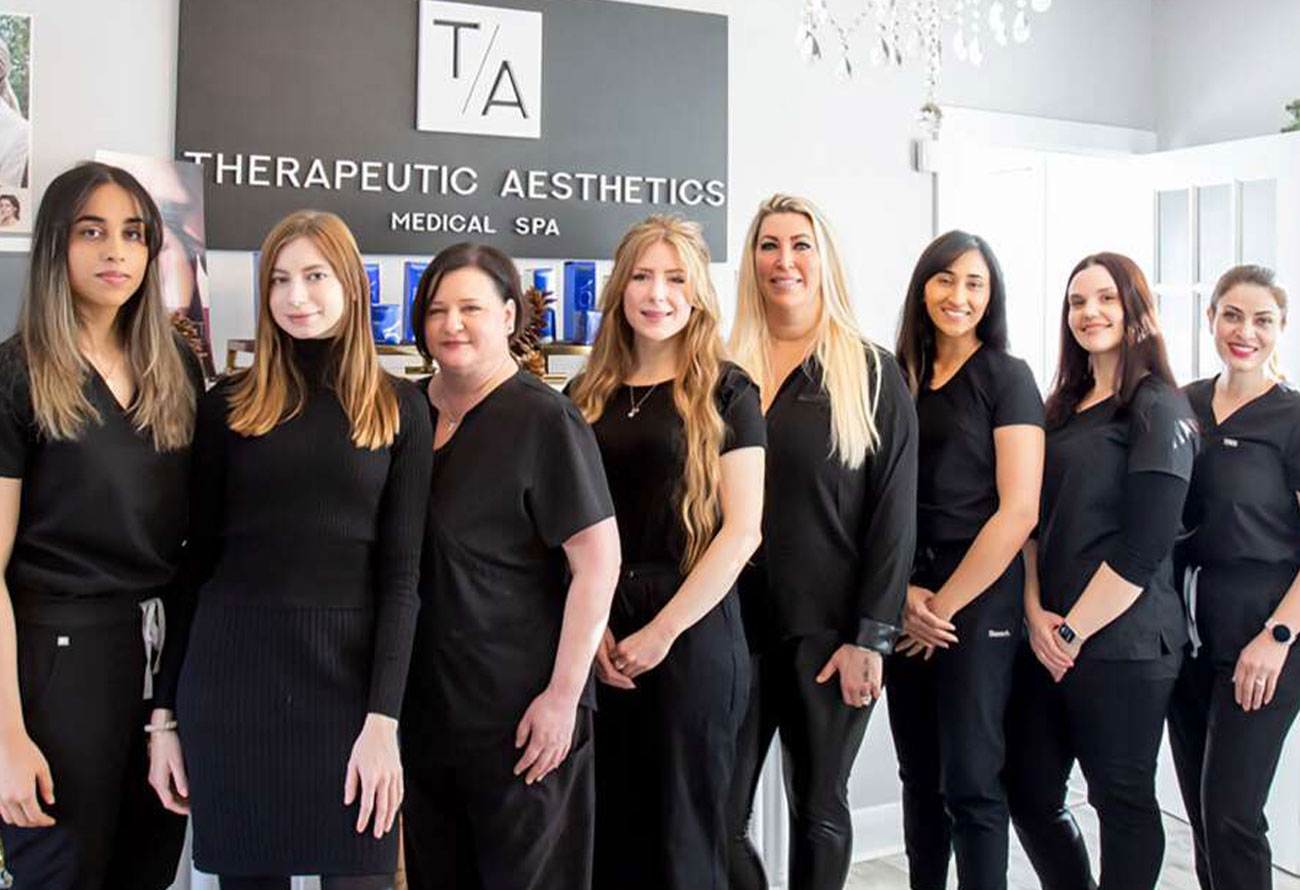
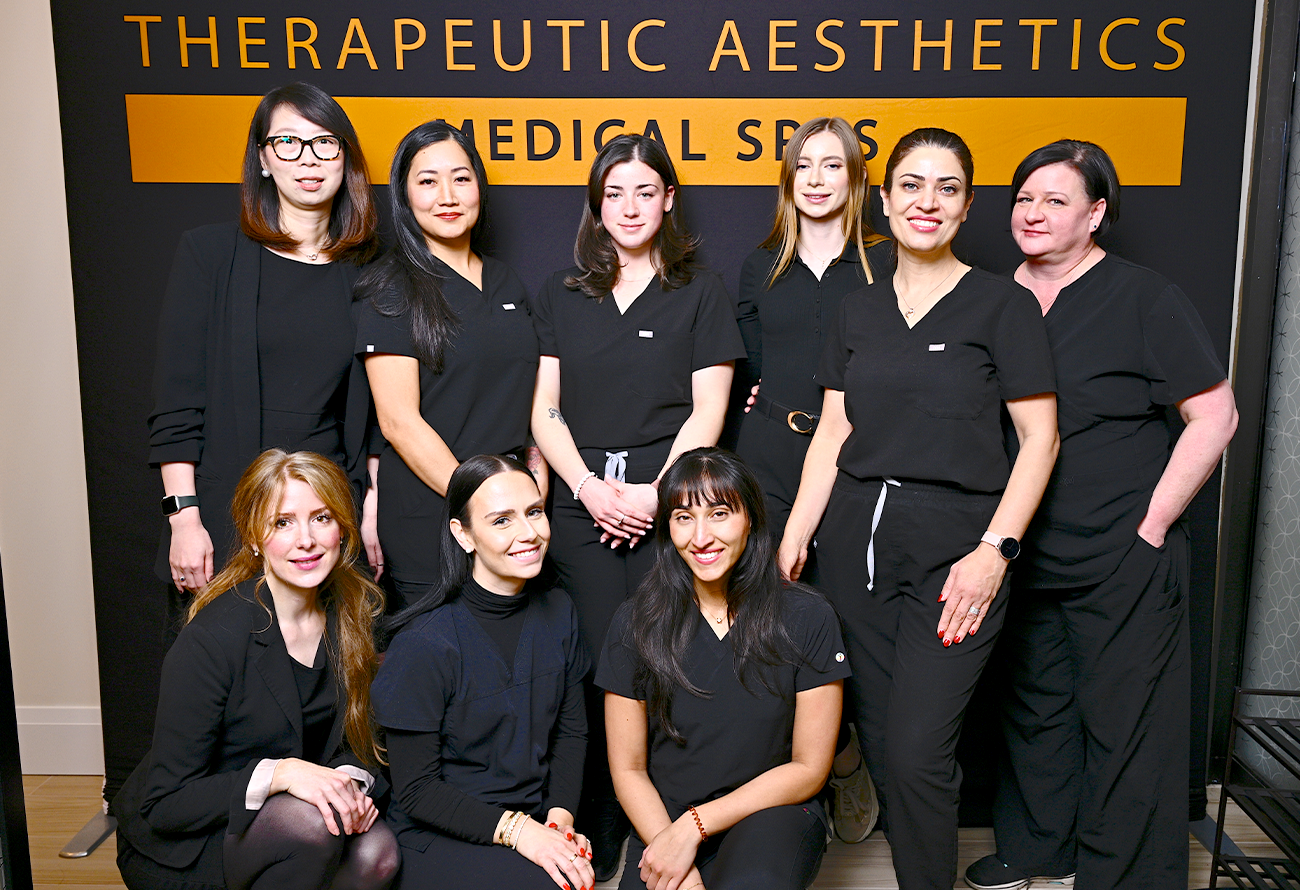
Therapeutics Aesthetics was founded by Dr. Nitin Chauhan, a board certified Otolaryngologist - Head and Neck Surgeon, and Ashley Haydarian RN in 2017. They developed the first formalized educational curriculum in Canada for aesthetic medicine to have approval from the the Royal College of Physicians and Surgeons of Canada (RCPSC), College Of Family Of Physicians Of Canada (CFPC) and Canadian Nurses Association (CNA). Ashley, our clinical lead nurse, was the first and only nurse in the country to have written curriculums in non-surgical aesthetic medicine which were accredited by the CNA, CFPC, and RCPSC, in collaboration with the Canadian Association of Medical Aesthetics (CAMA). In addition, Ashley is also the first nurse in the country to actually put through an accredited program with the Canadian Nurses Association. Applying his expertise in the field, Dr. Chauhan assisted with developing the theory and supplied the most up-to-date knowledge to form the curriculums, enriched with the input of global thought opinion leaders in the field.
Exceptional Client-Practitioner Relationships
Therapeutic Aesthetics is one of the most trusted medical spas across Southern Ontario. Not only do our clients come to us, time and time again, because of our award-winning cosmetic medical expertise, but they return to us because of our outstanding client service. We pride ourselves on creating strong relationships of trust, honesty and integrity with our clients, ensuring that they never have to “jump around” from clinic to clinic. At Therapeutic Aesthetics, our approach to cosmetic medicine is to treat the body from within, from the inside-out. We want to connect with you on a level that you understand, focusing on your emotional well-being, your needs and your goals.
Therapeutic Aesthetics is where science, the future, and luxury intersects in the world of cosmetic medical aesthetics.
Brand Mission
Our brand mission is to be authentic, consistent and focused.
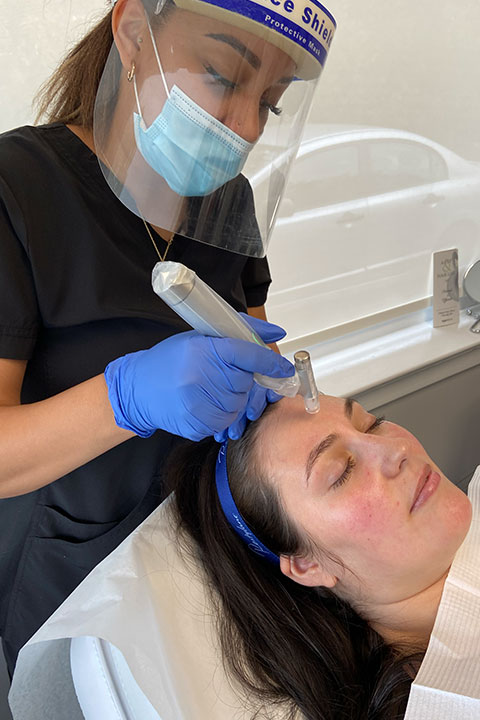
Your journey as a patient of our clinic is of utmost importance to us. Unlike other clinics, your experience with us doesn’t end when you complete your treatment. From the moment you step into our clinic for your initial consultation, throughout every single touch-point, not just during your treatment itself, but all the way up to your post-procedure recovery, we will take care of you. We make it a point to listen to your anxieties and concerns, and we create a personalized treatment strategy for you, taking every effort to address your needs, keeping your satisfaction in mind. We will be accountable every step of the way, and we will do our best to sincerely resolve any issue that impacts you from achieving your optimal result. This is our promise to you.
Evidence Based Protocols
Our practices are based on evidence based protocols developed by CAMA. These protocols are standardized systems that have been medically proven to create highly satisfying results for our patients, time and time again. We maintain quality with consistency, so that our patients are with us long-term so that they can maintain better outcomes in the future with relatively no negative effects.
Excellent results, every time
These evidence-based protocols are adopted from institutional leaders in the world of medicine, including the globally recognized Mayo Clinic and Dr. Sebastian Cotofana’s comprehensive work of evidence-based medical research in the field of medical aesthetics. Other clinics operate with commercialism in mind, developing and administering their treatments with a biased favouritism towards pushing and selling certain products. We do not. We use unbiased, scientifically rigorous evidence-based protocols to guide our treatments because we understand that aging is inevitable, and we want to give people control of their aging process, so that they can feel more confident, more attractive, and above all else, develop a higher degree of self-love for themselves. .
We believe in an open line of communication with our patients. We listen to each of your concerns prior to treatment and we keep those concerns in mind when we are performing the treatment to better attain your goals. If your goals are not achieved, we remain accountable to that and listen to you to see how we can resolve the issue.
Evidence based protocols:
Result in the best and most optimal outcomes for our clients
Ensure that every procedure is high-quality, with consistently positive results
Are based on decades of scientific research, which are amalgamated to create a system that works for every client, personally catered to their anatomy, age group, gender and goals
Our clinic’s philosophy is built on delivering natural, attainable, and realistic results based on industry-leading products. Aesthetic medicine should be used to enhance your natural features to make them more attractive, rather than creating an artificial appearance.